Behind the hoop
Handmade Embroidery Price: What Really Goes Into the Cost
An honest look behind the hoop at what shapes a handmade embroidery price: size, detail, stitch density, colours, fabric, custom sketching and, above all, time.
By Harshit Soni · Published · Updated
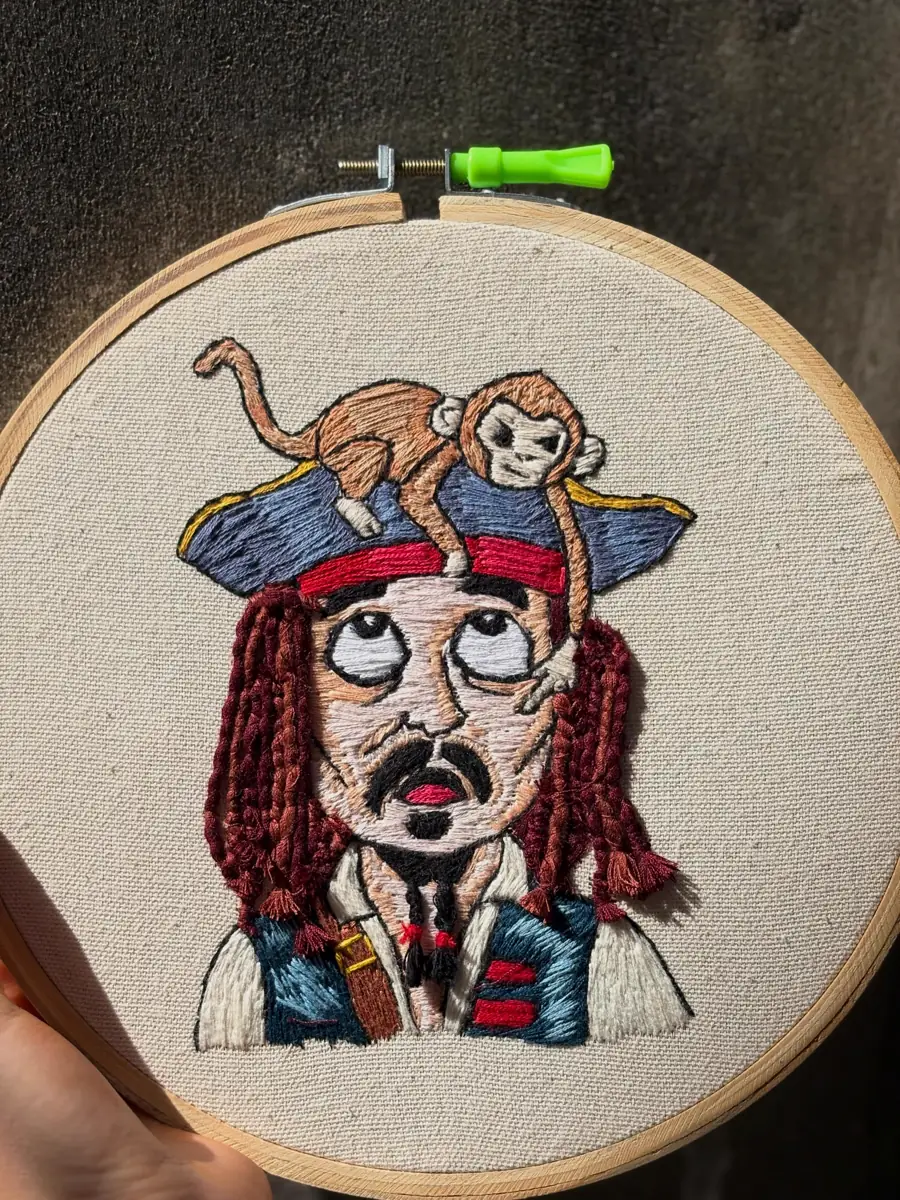
A handmade embroidery price depends mainly on how long a piece takes to stitch by hand, which is shaped by its size, level of detail, stitch density, number of colours, base fabric and the custom sketch behind it. That is why there is no fixed list price: we share the price with your sketch.
One of the questions we hear most often is simple: how much will it cost? It is a fair question, and it deserves a real answer. The honest truth is that a handmade embroidery price is not a fixed number on a list. It depends on what you want stitched, how big it is, how detailed it is and how much time it will take to make by hand.
That can feel frustrating when you are comparing options or planning a gift. So in this post, we want to open up the process and show you exactly what shapes the cost of a hand-embroidered piece, so that when you receive a quote, from us or from any maker, you understand what you are paying for.
We will not share rupee figures here, because every piece is different. We share the price with your sketch instead, once we know exactly what your piece involves.
Key takeaways
- Time is the biggest ingredient in any handmade embroidery price, because every stitch is placed by hand.
- A larger hoop means a much larger area to fill, so stitching time grows faster than the size.
- Long and short shading and dense clusters of French knots are among the slowest work.
- Outline-and-accent designs, fewer colours and plain backgrounds help a piece suit a smaller budget.
- The custom sketch comes first, and the price and timeline are shared with it before stitching begins.
Why does a handmade embroidery price vary so much?
A handmade embroidery price varies because its biggest ingredient is human time, and every piece needs a different amount of it. When something is made by a machine, the cost is mostly about materials and running time. When something is stitched by hand, every single stitch is placed by a person, one at a time.
At Haré Creations, everything is drawn and stitched by hand. There are no machines and no prints. That means two pieces that look similar at first glance can take very different amounts of time. A simple name might come together fairly quickly, while a detailed character scene with shading can take many, many hours.
So a fair quote looks at the specific piece. Here is how each factor affects it.
| Factor | What it means | Effect on price |
|---|---|---|
| Size | The area of fabric to fill with stitches | A larger area usually means more stitching time |
| Level of detail | Faces, textures, small props and backgrounds | More small elements add hours |
| Stitch types and density | The mix of outline, fill and shading stitches | Dense fills and shading take the longest |
| Number of colours | Thread changes, blending and colour planning | More colours usually mean more time |
| Fabric and base item | Hoop, tee, sweatshirt or keepsake cloth | Garments need extra preparation and care |
| Custom sketch | Drawing your idea before any stitching | The design work is part of the price |
Size and detail: how much there is to stitch
Size and detail decide how much there is to stitch, so they are usually the two biggest factors in how long a piece takes.
Factor 1: Size of the piece
Size is the most obvious factor, but it matters in a slightly different way than people expect. A bigger hoop does not just use a bit more fabric. It means a larger area to fill with stitches, and filling is where most of the time goes.
- Doubling the diameter of a hoop roughly quadruples the area, so the stitching time can grow much faster than the size.
- Larger pieces often carry more elements: backgrounds, props, extra characters.
- Very small pieces are not always quick either, since tiny details need slower, more careful stitching.
If you are unsure what size suits your wall or gift, tell us where it will go. We can suggest a size that fits the space and the level of detail you want.
Factor 2: Level of detail
Detail is where a piece really comes alive, and where the time adds up. Compare an outline-only design with a fully filled, shaded one and you can see the difference straight away.
Here is what usually counts as detail in a piece:
- Faces and expressions: eyes, eyebrows and mouths need precise backstitch and often very fine strands of thread.
- Hair, fabric folds and textures: these are built up with many short stitches in different directions.
- Small elements: buttons, stripes, trims, jewellery, text on clothing and props.
- Backgrounds: a plain fabric background is quicker than a filled sky, sea or scene.
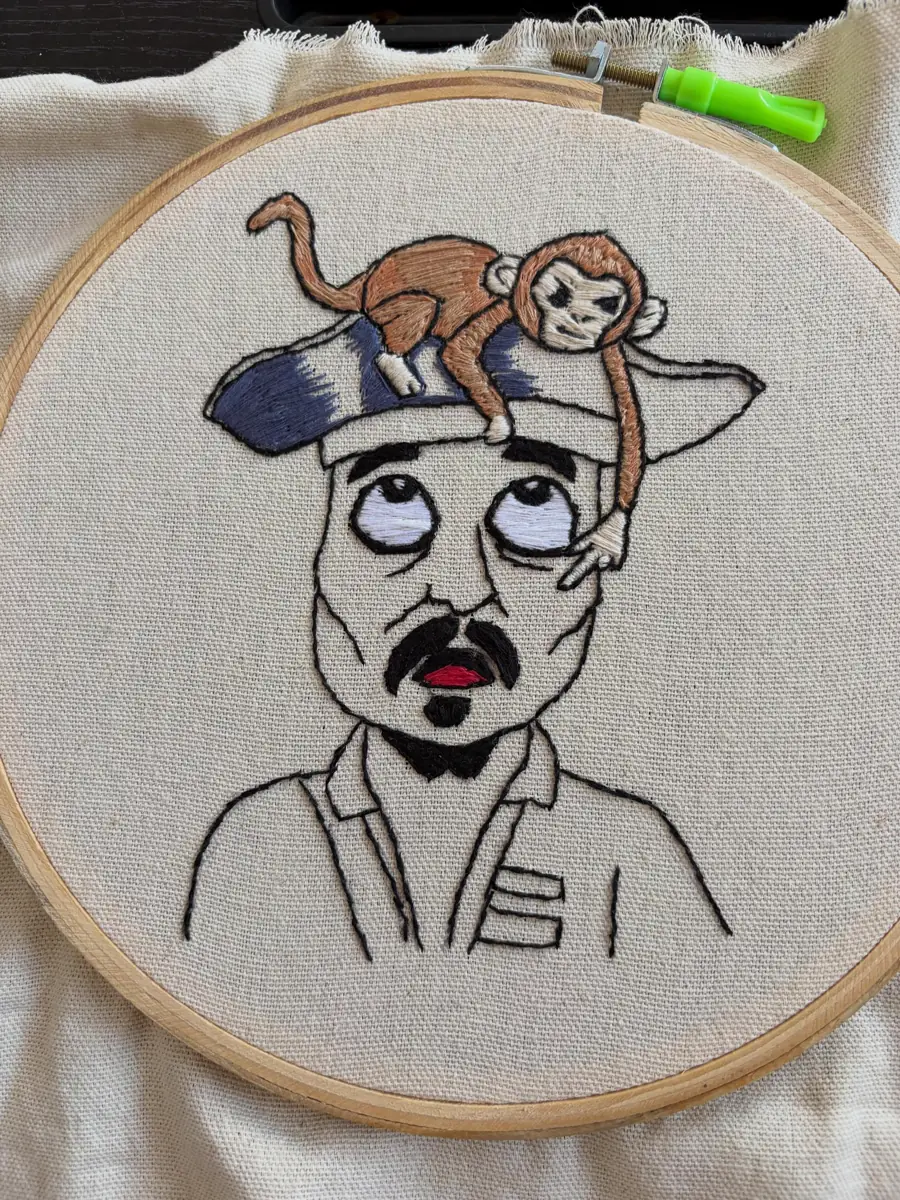
Our Captain Jack hoops are a good example. The scenes include ship details, clothing trims, the Kraken's tentacles and skin tones, and each of those adds hours. You can see how one of these comes together stage by stage on our process page.
Stitches and colours: how the piece is built
Stitches and colours decide how a piece is built, and both change the time it takes.
Factor 3: Stitch density and stitch types
Not all stitches take the same time. Some cover ground quickly, others are slow and deliberate. The mix of stitches in a design has a big effect on the handmade embroidery price.
- Backstitch: used for outlines, faces and lettering. Fairly quick for simple lines, slower for detailed faces.
- Satin stitch: smooth, glossy fills. It needs care to keep edges crisp, and large satin areas take time.
- Long and short stitch: used for shading and realistic blending. This is one of the slowest stitches, because colours are built up in layers.
- French knots and floral stitches: raised texture and blooming names. Each knot is made individually, so a dense cluster adds up quickly.
Density matters too. A fully covered design, where you cannot see the fabric underneath, takes far longer than an open, airy one with outlines and small accents. If you would like a lighter, more minimal look, that can also bring the time down.
Factor 4: Number of colours
More colours means more thread changes, more planning and, for shaded areas, more careful blending. A two-colour line drawing is very different from a full-colour portrait with realistic skin tones, hair highlights and shadowed clothing.
Colour also affects planning time. Before stitching, we choose shades from stranded cotton threads and check how they look together on the fabric. For portraits and characters, matching skin tones and signature colours can take real care. If you would like to know more about how we think about this, read our post on choosing thread colours.
Fabric and custom sketching: what comes before the stitching
The fabric and the custom sketch shape the work before any stitching begins.
Factor 5: Fabric and base item
Where the embroidery goes also affects the work. Our hoops are stitched on cotton-linen fabric in wooden hoops, which is a stable surface that holds stitches well.
- Hoops: the fabric, hoop and finishing are part of the piece.
- Clothing such as sweatshirts and tees: knit fabric stretches, so it needs extra preparation and care to keep the stitches smooth and comfortable to wear.
- Keepsake cloths: larger pieces of fabric may need more planning for layout and finishing edges.
A garment also adds the cost of the item itself and the extra handling to keep it clean and unmarked while it is being worked on.
Factor 6: Custom sketching and design
Every custom piece starts with a drawing. Before we stitch anything, we sketch your idea by hand and share it with you. That design step is real work and it is part of what you are paying for.
For a custom portrait of a person, couple or pet, we study your photos and turn them into a cute cartoon style that still feels like them. For a character, we plan the pose, expression and scene so it reads well in thread. For names, we design the lettering and the florals around it.
The sketch is also where the price becomes clear. Once the design is set, we know the size, detail, stitches and colours, so we share the price and estimated timeline with the sketch. You can approve it or ask for tweaks before any stitching begins. Our post from sketch to stitch explains this stage in more depth.
How long does hand embroidery take?
Hand embroidery takes time because each piece passes through many stages, from sketch to finishing, and that time is the biggest ingredient in the price. Hand embroidery is slow by nature, and that is part of its beauty.
- Drawing the sketch and refining it with you.
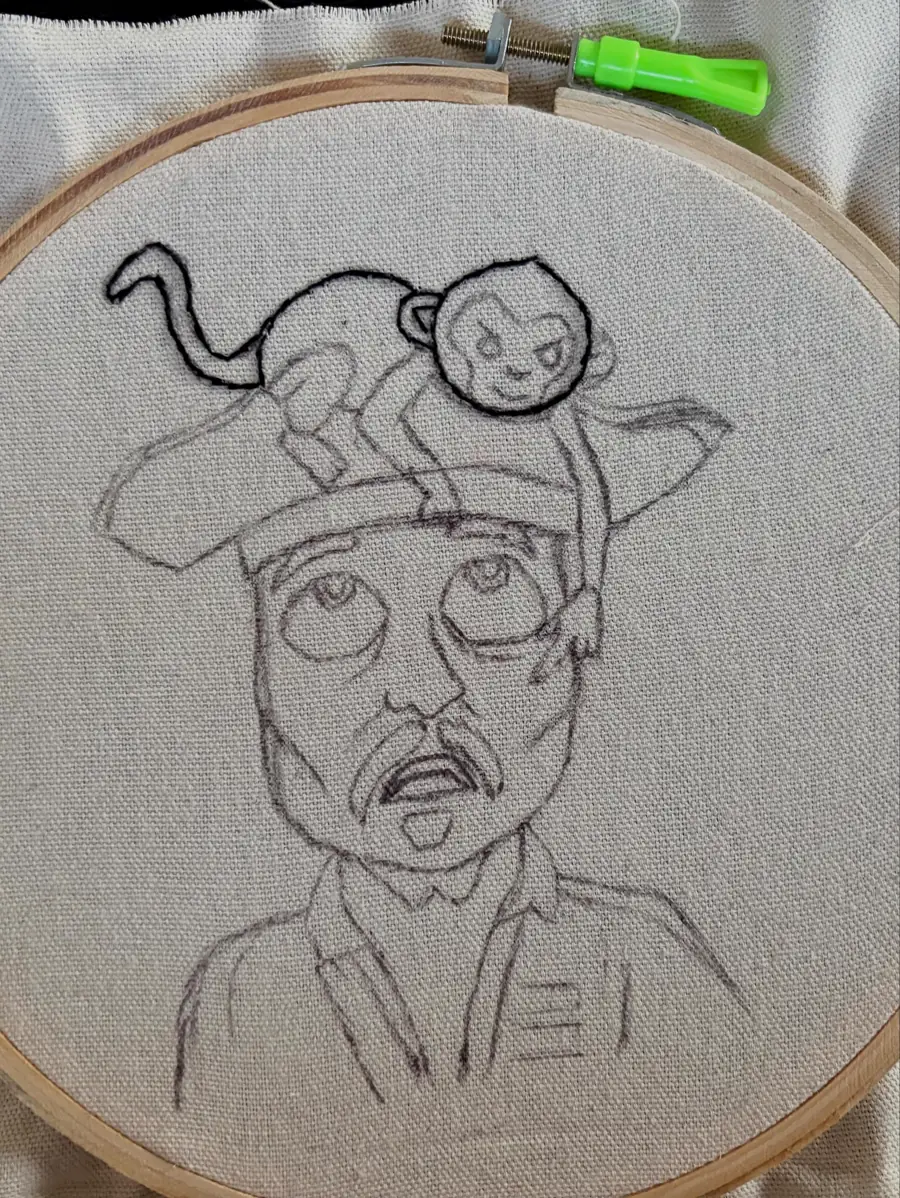
- Tracing the design onto fabric.
- Stitching the black backstitch outline.
- Filling in the first colours.
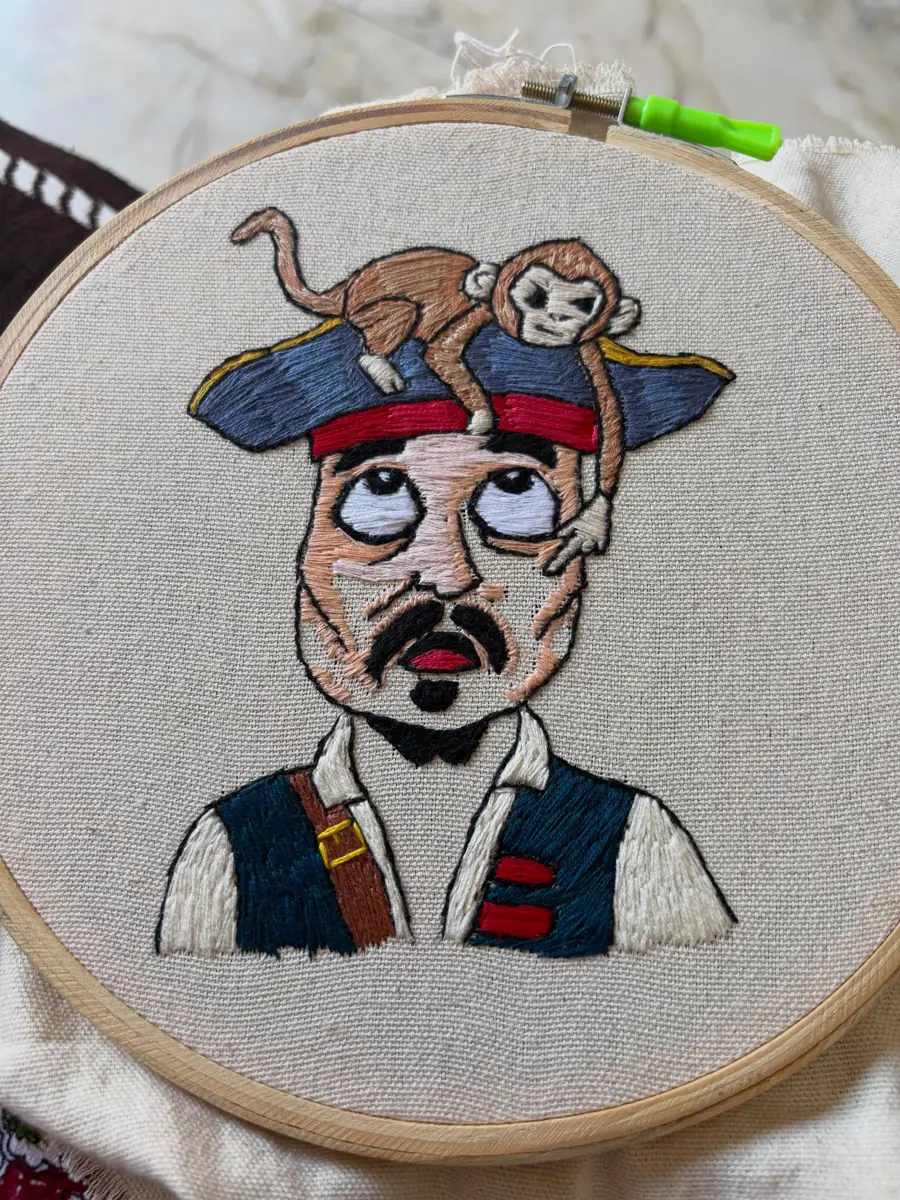
- Layering colours with satin and long and short stitches.
- Adding details such as stripes, trims and textures.
- Working skin tones and final fine details.
- Checking every part, finishing the back, and packing it with care.
When you pay for handmade work, you are paying for those hours, along with the skill built up from practice. It is also why we cannot promise the speed of a machine, and why we share an estimated timeline with each sketch rather than a fixed one for every order.
Why is hand embroidery more expensive than machine embroidery?
Hand embroidery costs more than machine embroidery because each hand-stitched piece is made from scratch. A machine can repeat the same design quickly, many times over, which spreads the cost across lots of pieces, while hand embroidery spends the time fresh every time.
What you get in return is texture, depth and character that a machine struggles to match: shading that blends naturally, soft raised knots and small variations that show a human hand. Our guide on hand embroidery vs machine embroidery goes into the differences in detail.
How can you plan a custom piece to suit your budget?
You can plan a custom piece around your budget by choosing the size, fill style and palette carefully, and by telling us your budget when you share your idea. We are happy to suggest ways to shape the design so it still feels special.
- Choose a smaller hoop size for detailed characters, or a larger one with a simpler design.
- Pick an outline-and-accent style instead of a fully filled design.
- Limit the palette to a few favourite colours.
- Keep the background plain and let the main subject shine.
- For names, choose a few flowers rather than a dense floral wreath.
- Share clear reference photos, which makes sketching smoother.
Gifting for a birthday, Raksha Bandhan, an anniversary or Diwali? Reach out early so there is time for the sketch, any tweaks and the stitching itself. You can also browse ready designs in our shop for ideas on size and style.
What should you ask an embroidery maker before ordering?
Before ordering, ask any embroidery maker whether the piece is fully handmade, whether you will see a sketch, and what size, materials and timeline to expect. A good maker will be glad you asked.
- Is the piece fully hand embroidered, or is any part printed or machine stitched?
- Will I see a sketch or design before the stitching begins?
- What size will the finished piece be, and what fabric and threads will you use?
- How many rounds of changes are included at the sketch stage?
- What is the estimated timeline, and when should I order for a specific occasion?
- How should I care for the piece once it arrives?
Clear answers to these questions tell you far more about value than a price alone. Two quotes can look very different simply because one includes more detail, a larger size or a fully custom drawing.
Frequently asked questions
Why is there no fixed handmade embroidery price on custom pieces?
Because every custom piece is different in size, detail, stitches and colours, and each of those changes the time it takes. Rather than guess, we draw your sketch first and share the price and estimated timeline with it. That way the price reflects your actual piece.
Is a detailed portrait more expensive than a name?
Usually, yes. Portraits involve faces, expressions, shading and more colours, which take more time than lettering and florals. That said, a very large or dense floral name can also involve a lot of work, which is why we quote each piece individually.
Does asking for changes to the sketch change the price?
Small tweaks are part of the sketch stage. If a change makes the piece bigger, more detailed or adds elements, the price may change too, and we will tell you clearly before stitching starts.
Why does hand embroidery cost more than machine embroidery?
Machine embroidery can reproduce one design many times quickly. Hand embroidery is made one stitch at a time, and each piece is new work. The cost reflects that time and the skill involved.
How do I get a price for my idea?
Share your idea through the custom order form or an Instagram DM. We draw a sketch and share it with the price and estimated timeline, and you decide whether to go ahead. You can also check our FAQ for more answers.
Understanding your handmade embroidery price
A handmade embroidery price is really a reflection of time, skill and care: the size of the piece, the detail, the stitches, the colours, the base fabric and the custom drawing that starts it all. Knowing these factors helps you compare quotes fairly and plan a piece that fits both your idea and your budget.
If you have something in mind, start a custom order and tell us about it. We will draw your sketch and share the price and timeline with it, so you know exactly what you are getting before a single stitch goes in.
Topics: handmade embroidery price, hand embroidery cost, custom embroidery price India, why is hand embroidery expensive, embroidery hoop price factors, custom embroidered portrait cost, hand embroidery vs machine embroidery cost, how long does hand embroidery take