Guide
The Best Fabric for Embroidery: What to Stitch On and Why
Why the cloth under your stitches matters so much, how to judge any fabric in a few seconds, and which ones suit hoop art, clothes, gifts and beginners.
By Harshit Soni · Published · Updated
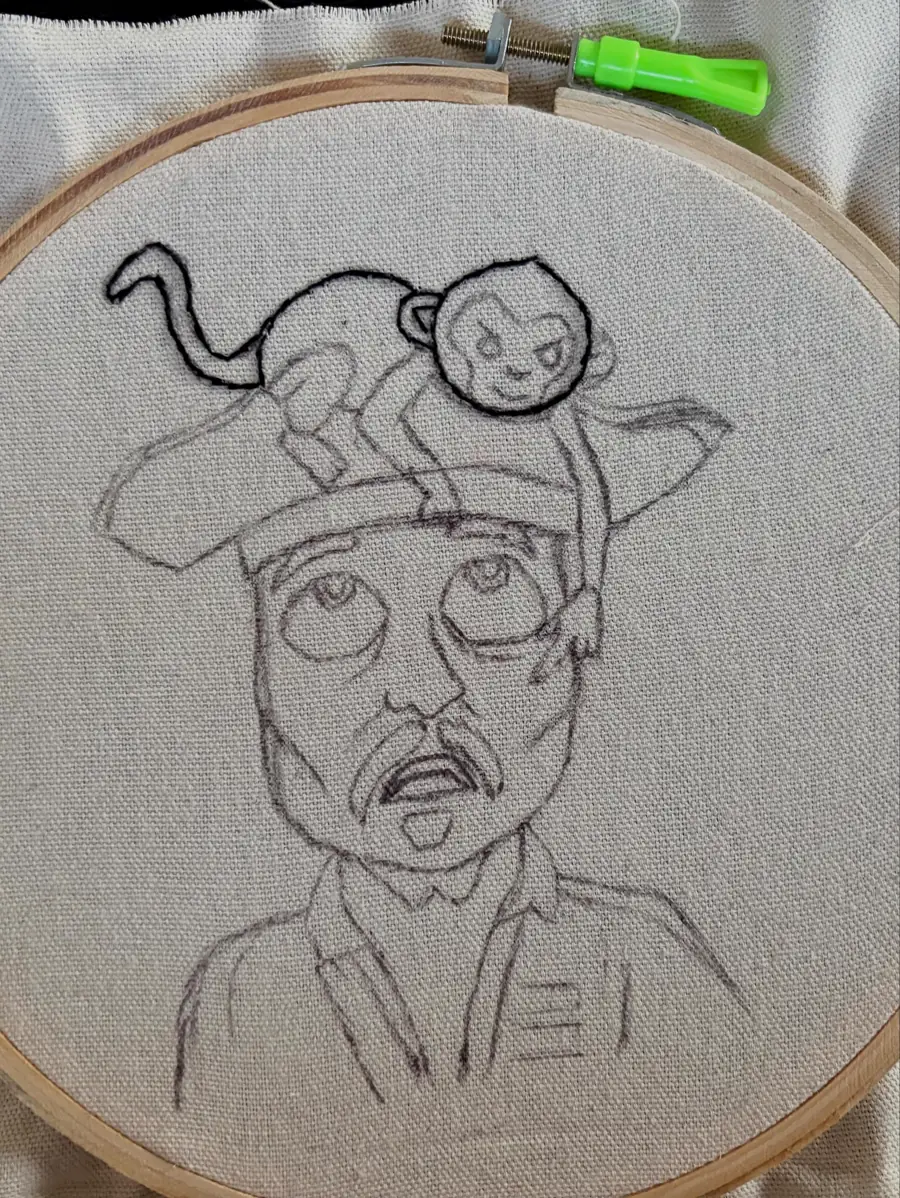
The best fabric for embroidery is a tightly woven, medium-weight natural fabric with little stretch, such as cotton or a cotton-linen blend. It holds stitches crisply, stays taut in the hoop and takes markings clearly. Linen and khadi add texture, denim and canvas add strength, and stretchy knits or thin fabrics need a stabiliser.
Most stitchers spend hours choosing threads and minutes choosing cloth. Yet the fabric decides how smooth your satin stitch looks, whether your outlines stay crisp and how the piece holds up for years. Picking the best fabric for embroidery is one of the easiest ways to make your work look instantly more polished.
In our studio we stitch our hoops on cotton-linen fabric, and we have tried plenty of others along the way. Some fought every stitch, some puckered after washing and some were a joy to work on. This guide shares what we have learned.
We will cover the qualities that make a fabric easy to embroider, a quick test you can do in any shop, the fabrics that work best for different projects, the ones to be careful with, and how to prepare your cloth before the first stitch.
Key takeaways
- Cotton and cotton-linen blends are the easiest, most reliable fabrics for hand embroidery.
- Look for a tight, even weave, natural fibres, medium weight and little stretch.
- Stretchy tees, thin mulmul and slippery synthetics need a stabiliser.
- Prewash anything that will be washed, so it shrinks before you stitch.
- Khadi and linen suit bold, textured designs more than tiny details.
What makes a fabric good for embroidery?
A good embroidery fabric has four qualities: a tight, even weave, natural fibres, a medium weight and little or no stretch. You do not need to memorise fibre names; look for these and you will rarely go wrong.
A tight, even weave
The threads of the fabric should sit close together in a regular grid. A tight weave supports each stitch, so fine lines and small details stay where you put them. A loose weave lets stitches sink, wander or slip between threads.
Natural fibres
Cotton, linen and their blends grip thread well, press easily and wash predictably. Many synthetic fabrics are slippery, can pucker around stitches and may be damaged by a hot iron.
Medium weight
Very thin fabric shows the back of your work and puckers easily. Very thick fabric is tiring to push a needle through. A medium weight, similar to a sturdy shirt or a tablecloth, is the comfortable middle.
Little or no stretch
Stretchy fabric moves in the hoop and distorts stitches when you take it out. Woven fabrics stay put. Knits like t-shirts can be embroidered, but they need extra support.
How can you test a fabric before buying it?
You can test any fabric in about 30 seconds by holding it to the light, pulling it along the grain, scrunching it and feeling its surface. Try this at a fabric shop, a local market or with leftover pieces at home.
- Hold it up to the light. You should see only a little light between the threads. If you can see clearly through it, it is too thin to use alone.
- Pull it gently along the straight grain, then across. Good embroidery fabric barely gives. Only the diagonal (bias) should stretch a little.
- Scrunch it in your fist for a few seconds. Heavy creasing is fine to iron out, but fabric that stays limp and floppy may not hold stitches crisply.
- Run your fingers over it. Big bumps and slubs will show through small, detailed stitches.
- Ask what it is made of. Pure or mostly cotton or linen is the safest choice.
Our pick: the best fabric for embroidery hoop art
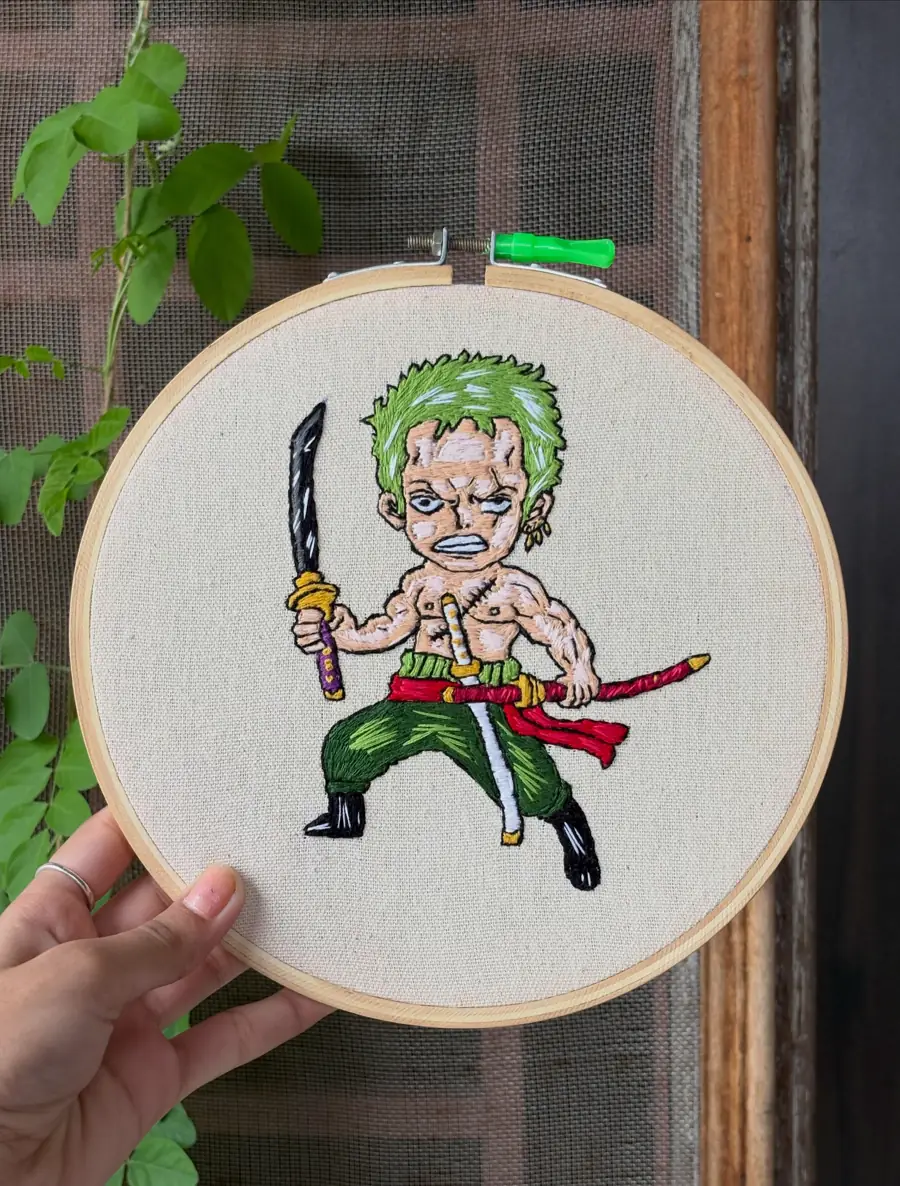
The best fabric for embroidery hoop art is a cotton-linen blend, which suits framed hoops, character portraits, lettering and florals. It is what we use for our pieces, and here is why.
- Linen adds body and a gentle natural texture that looks lovely framed in a wooden hoop.
- Cotton softens the weave and makes it smoother than pure linen, so fine backstitch faces stay clean.
- It holds tension in the hoop well and takes dense satin and long and short stitch without puckering.
- It takes pencil and water-soluble pen marks clearly, which makes sketching and tracing easier.
A plain, sturdy cotton is a close second. It is affordable, easy to find in any Indian cloth market and very forgiving for practice. If you are just starting, our guide to hand embroidery for beginners suggests exactly this kind of fabric for a first hoop.
How do common fabrics behave under a needle?
Common fabrics range from easy to stitch, like cotton and cotton-linen, to tricky, like fine voile and slippery synthetics, depending on weave, weight and stretch. Here is how the ones you are most likely to come across perform.
Cotton (poplin, cambric, quilting cotton)
Dense, smooth and widely available. Excellent for beginners, lettering and colourful fills. Very fine cottons may need a second layer behind them to stop the back of the work showing through.
Linen
Strong, with a beautiful texture and a natural, slightly rustic look. Pure linen can have an irregular weave, which may make very tiny details harder. It creases easily, so press it well before hooping.
Cotton-linen blends
The balance of both: smoother than linen, with more character than plain cotton. Our all-round choice for hoops and wall art.
Khadi
Hand-spun and hand-woven, khadi has charm and a lovely handmade feel that pairs well with hand embroidery. Its natural slubs and uneven texture suit bold, simple designs, folk-style motifs and chunky stitches. For very fine faces or small text, a smoother weave is easier.
Mulmul and fine voile
Soft and airy, these are wonderful to wear but thin to stitch. Use a light backing or stabiliser, keep designs small and avoid carrying threads across the back, since they will show through.
Denim and canvas
Tough and great for jackets, tote bags and pouches. Use a sharp, strong needle and more strands of thread for bold results. Outlines and simple fills work better than delicate shading on heavier cloth.
Felt
Does not fray, so it is great for ornaments, badges and craft projects with children. It is less suited to fine detail because stitches can sink into its surface.
Aida and evenweave
Designed for counted work like cross stitch, with a visible grid of holes. Fine for that purpose, but the holes can make free-form outlines and smooth satin stitch look choppy.
Polyester and slippery synthetics
Often slippery, prone to puckering and sensitive to heat. If you must use them, add a stabiliser and keep designs simple.
| Fabric | Weave | Beginner friendly | Best for |
|---|---|---|---|
| Cotton | Tight and smooth | Yes | Practice, lettering and colourful fills |
| Cotton-linen blend | Tight with gentle texture | Yes | Hoop art, portraits and florals |
| Linen | Can be irregular | Fairly | Textured, natural-looking pieces |
| Khadi | Hand-woven with slubs | Fairly | Bold, folk-style motifs |
| Denim and canvas | Dense and heavy | With practice | Jackets, totes and pouches |
| Cotton knit tees | Knitted and stretchy | Only with stabiliser | Names and small motifs on clothing |
| Polyester synthetics | Often slippery | No | Simple designs with stabiliser |
Can you embroider on t-shirts and clothes?
Yes, you can embroider on t-shirts and clothes, as long as you plan for stretch, washing and comfort against the skin. Clothes are a lovely way to wear your embroidery.
T-shirts and sweatshirts
Cotton knits stretch, so back the area with a stabiliser before hooping. A tear-away or iron-on stabiliser on the inside, or a water-soluble stick-on stabiliser on top, keeps stitches even. Do not stretch the fabric while hooping, and keep the design a comfortable size for where it will sit on the body.
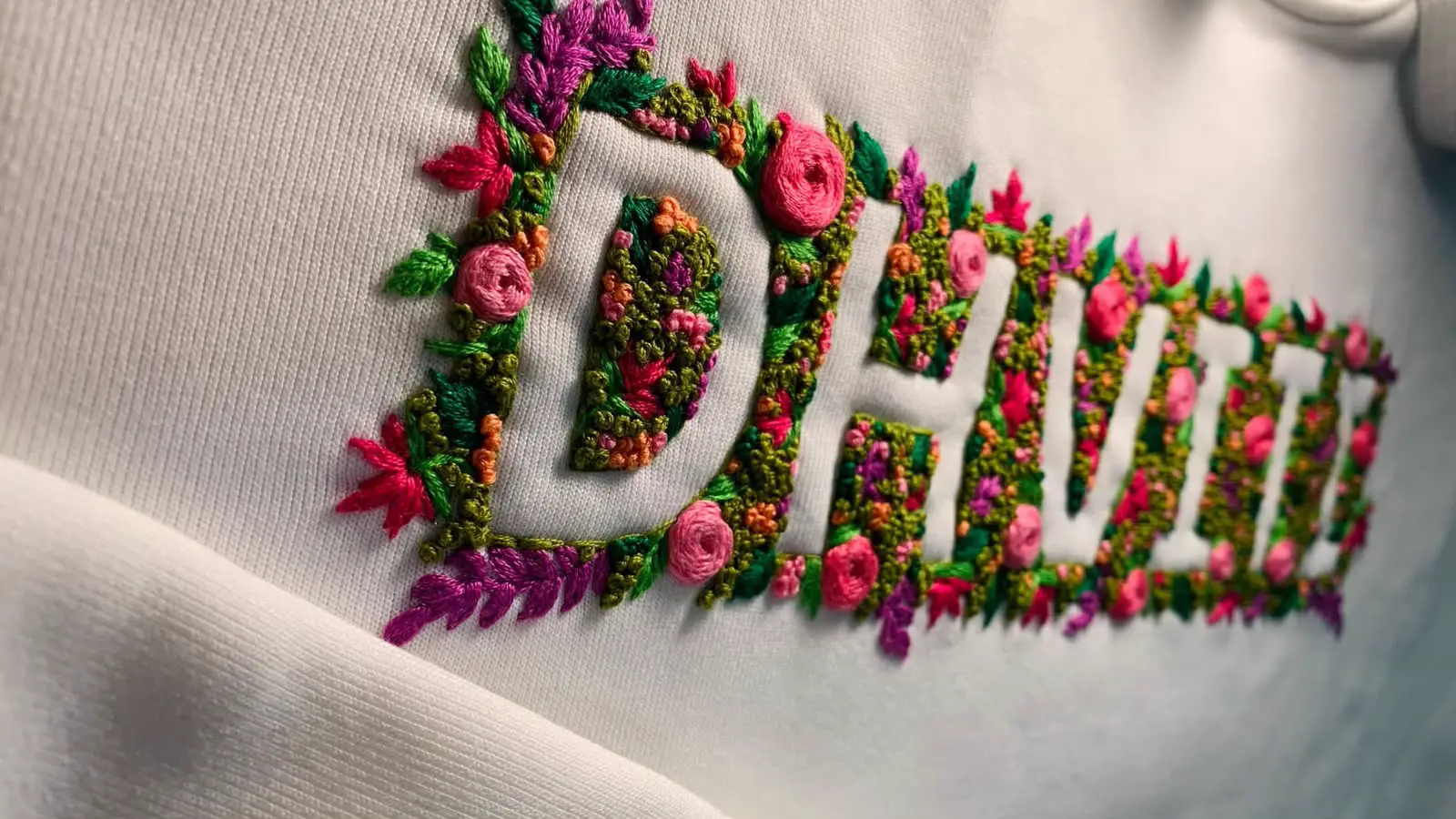
Our floral name sweatshirt and floral initial tees are made this way, with soft stitches that sit flat. For marking designs on knits, our guide on how to transfer an embroidery pattern covers stabiliser methods step by step.
Shirts and kurtas
Woven cotton shirts and kurtas are straightforward. Choose a spot away from seams and buttons, and consider how it will be washed. Small motifs on a collar, cuff or pocket are easy starter projects.
Baby cloths and keepsakes
For anything meant for a little one, choose soft, breathable natural fabric like cotton or cotton-linen. Keep the back tidy with ends woven in securely so nothing is scratchy or loose. Our baby keepsake cloth uses little animals and flowers stitched on soft fabric for exactly this reason.
Quick match: fabric by project
Match the fabric to the project: cotton-linen for hoop art, stabilised knits for clothing, canvas for bags and khadi for rustic motifs. Use this as a cheat sheet in the shop; it covers the projects people ask us about most.
- Framed hoop art and wall pieces: cotton-linen or sturdy cotton.
- Character portraits with fine faces: a smooth, tightly woven cotton or cotton-linen, so small backstitch features stay sharp.
- Floral names and lettering on clothing: the garment itself, backed with a stabiliser if it is a knit.
- Handkerchiefs and small festive gifts for Diwali or Raksha Bandhan: soft cotton, with a light backing if it is very fine.
- Tote bags and pouches: canvas or denim, with more strands of thread.
- Rustic or folk-style motifs: khadi or linen, where texture is part of the charm.
- Practice samplers: any inexpensive medium-weight cotton you have at home.
What fabric mistakes should you avoid?
The most common fabric mistakes are choosing by colour alone, skipping the prewash, cutting too small and using thin fabric without backing. Most only show up halfway through a project, when they are hard to fix.
- Choosing by colour alone. A beautiful shade on a flimsy, stretchy base will fight you the whole way. Check the weave and weight first.
- Skipping the prewash on wearables. The fabric shrinks in the first wash and the stitches pucker around it.
- Cutting too small. A piece that barely fits the hoop is hard to keep tight and impossible to frame neatly.
- Using a thin fabric without backing. Every knot and carried thread shows through as a shadow on the front.
- Leaving fabric in the hoop for weeks. It can leave a stubborn ring crease. Loosen or remove the hoop between sessions.
- Mixing very heavy stitching with very light fabric. Dense satin fills need a fabric with enough body to carry them.
Preparing fabric before you stitch
To prepare fabric for embroidery, prewash it, iron it, cut it generously, stop the edges fraying and back it if it is thin. A few minutes of preparation saves hours of frustration later.
- Prewash items that will be washed. This lets cotton shrink before you stitch, not after.
- Iron smooth while slightly damp for easier pressing.
- Cut generously. Leave at least 5 cm beyond the design on all sides, more for larger hoops or framing.
- Stop fraying. Zigzag the edges on a machine, run a quick overcast by hand or fold masking tape over raw edges.
- Add backing if needed. Tack or fuse a second layer of plain cotton behind thin fabric.
- Match the hoop. Choose a hoop just larger than the design so you rarely need to move it over finished stitches.
Fabric and thread work as a pair: thicker fabric can take more strands, delicate fabric asks for fewer. Our post on embroidery thread types explains how to match them.
Storing fabric in Indian weather
Store embroidery fabric in a breathable cotton bag or a closed box, because humidity is the quiet enemy of fabric stashes. During the monsoon, cotton and linen can absorb moisture, feel limp and in bad cases develop mildew spots.
- Store fabric in a cotton bag or a closed box rather than sealed plastic, which can trap moisture.
- Air your fabric on a dry, sunny day, but keep it out of harsh direct sun for long periods to avoid fading.
- Add a few silica gel packets to your storage box during the rainy months.
- Keep finished and in-progress pieces covered so dust does not settle on light fabric.
Frequently asked questions
What is the best fabric for embroidery for beginners?
A medium-weight woven cotton or cotton-linen blend. It is smooth, stable in the hoop, easy to mark and forgiving if you need to unpick stitches.
Is linen better than cotton for embroidery?
Neither is simply better. Linen is strong and textured with a natural look, while cotton is smoother and more uniform for fine detail. A cotton-linen blend gives you some of both.
Can I embroider on khadi?
Yes. Khadi's handmade texture looks lovely with hand embroidery, especially bold motifs and simple florals. Very fine details are easier on a smoother fabric.
Do I need stabiliser for embroidery?
Not for medium-weight woven cotton or linen. Use one for stretchy knits like t-shirts, very thin fabrics like mulmul, and slippery synthetics, where it keeps stitches even.
What fabric should I avoid for hand embroidery?
As a beginner, avoid very stretchy knits without stabiliser, loose open weaves, very sheer fabric and slippery synthetics. They make even stitching much harder.
Choosing the best fabric for embroidery, in short
The best fabric for embroidery is tightly woven, natural, medium-weight and stable. For hoop art and most projects that means cotton or cotton-linen. Linen and khadi add texture, denim and canvas bring strength, and knits and fine fabrics simply need a stabiliser to behave.
If you would like to see how cotton-linen looks with detailed stitching, browse the finished hoops in our shop. Or, if you have a design, name or portrait in mind, share it through our custom order form and we will send you a sketch with the price and timeline.
Topics: best fabric for embroidery, best fabric for hand embroidery for beginners, cotton vs linen for embroidery, which cloth is best for embroidery in india, embroidery on khadi fabric, how to embroider on t shirt fabric, embroidery fabric for hoop art, stabiliser for embroidery on thin fabric