Tips
Types of Embroidery Thread: What Each One Does and When to Use It
Stranded cotton, pearl cotton, silk, rayon, wool, metallic: a practical guide to the types of embroidery thread, what each does best and how to handle it.
By Harshit Soni · Published · Updated
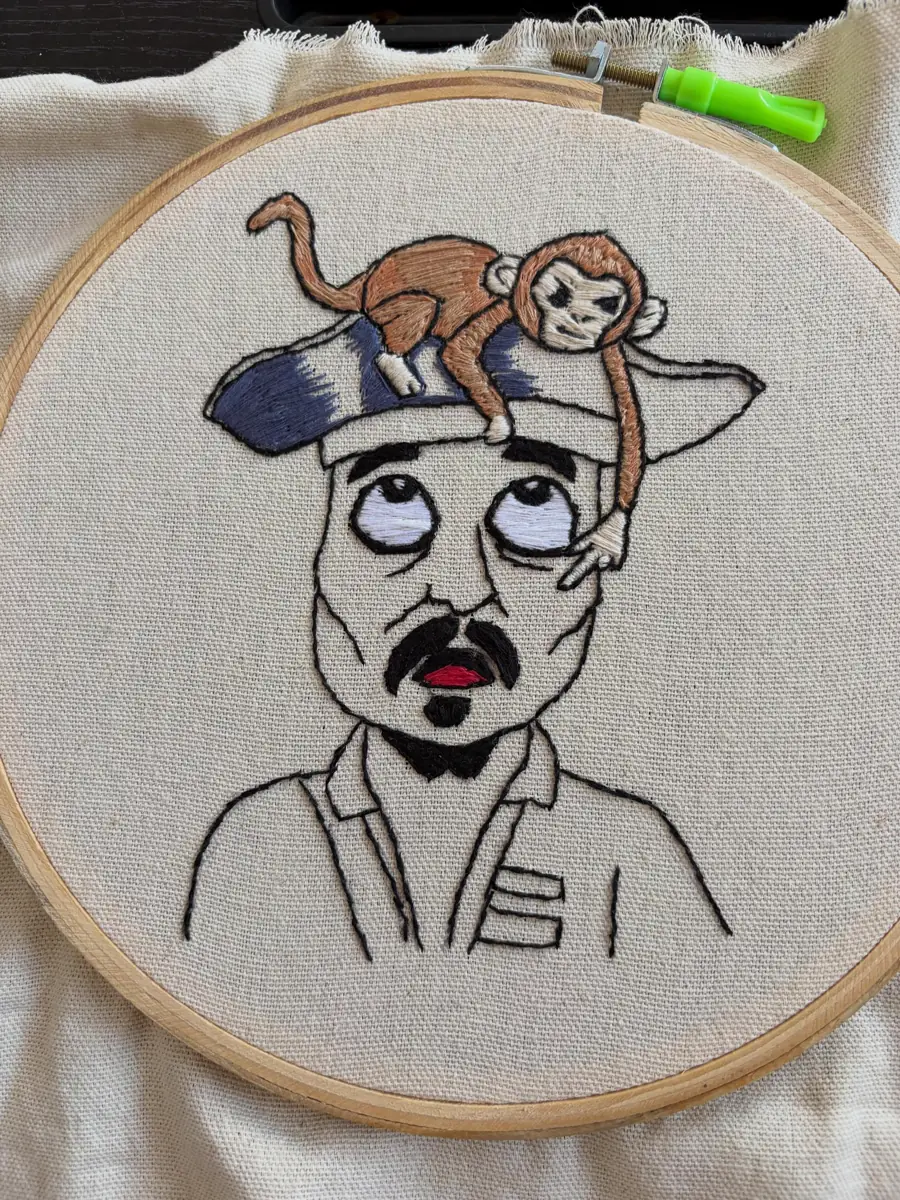
The main types of embroidery thread are stranded cotton, pearl cotton, silk, rayon, metallic and wool. Stranded cotton is the most versatile and beginner friendly because you can split its six strands for fine or bold lines. Pearl cotton adds texture, silk and rayon add shine, metallics add sparkle and wool adds cosy fuzz.
Walk into any craft shop in India and the thread wall can feel overwhelming. Rows of tiny skeins, twisted balls, shiny spools and metallic cards, all promising to be the one you need. Understanding the main types of embroidery thread is the fastest way to stop guessing and start stitching with confidence.
At Haré Creations, almost everything we make is stitched with stranded cotton on cotton-linen fabric in wooden hoops. But we have tried plenty of other threads along the way, and each one behaves differently in your hands and on the cloth. Some glide, some twist, some fluff up, and some shine so brightly they change the whole mood of a piece.
This guide walks through the threads you are most likely to meet, what each one is good at, how many strands to use, and a few habits that make any thread easier to work with. If you are brand new, pair it with our beginner's guide to hand embroidery.
Key takeaways
- Stranded cotton is the best all-round thread for hand embroidery and for beginners.
- Two strands of stranded cotton suit most outlines and satin stitch fills on cotton-linen.
- Pearl cotton is a single twisted thread for bold, textured lines and borders.
- Silk, rayon and metallic threads give shine but are slippery, so use short lengths.
- Keep thread in a closed box with silica gel during the monsoon to prevent mildew.
Why the types of embroidery thread matter
The types of embroidery thread matter because thread is not just colour. Its thickness decides how bold a line looks. Its twist decides whether a fill lies smooth or looks ropey. Its fibre decides how it takes light, how it washes and how forgiving it is when you make mistakes.
Choosing the right thread for the job also saves time. A thick thread fills an area in fewer passes, while a fine one lets you add tiny details like eyelashes or the glint in a character's eye. Once you know the options, you can mix them on purpose instead of by accident.
- Line weight: thicker threads make bolder outlines and lettering.
- Texture: some threads lie flat, others stand up and add dimension.
- Sheen: cotton has a soft glow, silk and rayon are glossy, metallics sparkle.
- Care: cotton is easy to wash; silk, rayon and metallics need more gentleness.
What is stranded cotton embroidery thread?
Of all the types of embroidery thread, stranded cotton, often called embroidery floss, is the one most people picture when they think of hand embroidery. A single length is made of six fine strands loosely twisted together. You can separate them and stitch with one, two, three or all six, which makes it incredibly versatile.
Most good stranded cotton is mercerised, a treatment that gives the fibres a gentle lustre and helps colours stay rich. It comes in a huge range of shades, is affordable, and is widely available in Indian craft and stationery shops as well as online.
How many strands of stranded cotton to use
There is no single correct number, but these starting points work well on medium-weight fabric like cotton-linen:
- One strand: tiny facial details, eyelashes, fine hair lines and very small lettering.
- Two strands: most outlines in backstitch, smooth satin stitch fills and neat long and short shading.
- Three strands: bolder outlines, chunkier lettering and French knots with more body.
- Four to six strands: heavy texture, quick fills on larger designs, or a deliberately rustic look.
In our character hoops, like the Luffy with carrots hoop, faces and outlines are usually worked in fewer strands so expressions stay crisp, while clothing and backgrounds can take a little more thread for coverage.
How to separate strands without tangles
Cut a length roughly the distance from your fingertips to your elbow. Longer pieces tangle and wear thin as they pass through the fabric again and again. Hold the thread near the top, pinch out one strand and pull it straight up slowly while the rest bunches below and untwists on its own.
Pull strands out one at a time even if you need three, then lay them back together. This step, sometimes called stripping, helps the strands lie flat side by side, which gives smoother satin stitch and cleaner lines.
What is pearl cotton used for?
Pearl cotton is used for bold outlines, decorative borders and stitches where you want texture to show. Also sold as perle cotton, it is a single twisted thread that you do not separate, with a noticeable twist and a soft shine that looks almost beaded along a line of stitches.
Pearl cotton comes in numbered sizes, and the higher the number, the finer the thread. Size 8 and size 12 are fine and easy to handle, while size 5 and size 3 are noticeably thicker and suit chunky, graphic work. Because it is one twisted thread, it tends to fray less than loose strands pulled from a skein.
- Great for: chain stitch, running stitch borders, French knots with a rounded shape, simple line drawings.
- Less ideal for: very fine shading or delicate facial details.
- Tip: use a needle with a larger eye so the twist is not crushed as you pull through.
Is silk thread good for hand embroidery?
Silk thread is excellent for hand embroidery when you want a deep, liquid sheen that cotton cannot quite match. It catches light beautifully in satin stitch and long and short shading, making flower petals and fabric folds look almost real. India has a long history of silk embroidery, and silk is still loved for festive and heirloom work.
Silk is finer and smoother than cotton, so it can be slippery and may snag on rough fingers. It is usually more expensive and often needs gentler care. If you want to try it, start with a small area like a single flower or a highlight rather than a whole design.
Tips for stitching with silk
- Keep your hands smooth and dry; a little hand cream well before stitching helps, but wash off any excess.
- Use shorter lengths to reduce wear and fuzzing.
- Let the needle hang and untwist every few stitches so the sheen stays even.
- Test for colourfastness on a scrap before using silk on something that will be washed.
Rayon and viscose threads: high shine, high personality
Rayon or viscose embroidery thread is made from processed plant cellulose and is known for a very bright, glossy finish. It is popular for designs that need to pop, like shiny armour, water or festive motifs that echo the sparkle of Diwali decorations.
The trade-off is handling. Rayon is springy and slippery, so it can kink, knot and slide out of the needle. Many stitchers dampen it very slightly before use to tame it, and keep lengths short. Try it once you are comfortable with cotton, not on your very first piece.
How do you stitch with metallic embroidery thread?
Stitch metallic embroidery thread in short lengths, slowly, and only for small accents. Metallics add glints of gold, silver or copper and connect beautifully with traditional Indian embellishment styles, perfect for jewellery details, buttons, stars, sword hilts or a festive border on a gift for Raksha Bandhan.
Among all the types of embroidery thread, metallics are the fussiest. They can fray, untwist and snag as they pass through the fabric. A few habits make them far easier:
- Work with short lengths, shorter than you would use for cotton.
- Use a needle with a larger eye to reduce friction on the thread.
- Stitch slowly and avoid pulling hard.
- Save metallics for small accents rather than large fills.
- Some stitchers combine one metallic strand with one cotton strand for easier handling with a softer shimmer.
Wool, crewel and other specialty threads
Wool and crewel yarn
Wool and crewel yarn give embroidery a soft, matte, slightly fuzzy look. They fill quickly and create cosy texture, which suits leaves, animals and rustic floral designs. Wool usually needs a sturdier fabric and a needle with a big eye, and it is less happy with frequent washing.
Variegated threads
Variegated threads change colour along their length, either through shades of one colour or a mix of colours. They create gentle gradients without you switching threads, which can be charming in flowers and borders. Just note that the colour change follows the thread, not your design, so the result is a bit unpredictable.
Which thread should you choose for your project?
If you only buy one type of embroidery thread, make it stranded cotton. It handles outlines, fills, shading and texture, washes well, and is easy to find. Then add others slowly as your designs ask for them.
- Hoop art for your wall: stranded cotton for everything, with optional silk or metallic highlights.
- Clothing like tees and sweatshirts: stranded cotton, since it tolerates gentle washing well.
- Bold, graphic line art: pearl cotton or three to six strands of stranded cotton.
- Festive and heirloom pieces: silk and metallic accents over a cotton base.
- Cosy, textured decor: wool or crewel yarn on sturdier fabric.
| Thread | Fibre | Finish | Best for |
|---|---|---|---|
| Stranded cotton | Mercerised cotton, six strands | Soft sheen | Outlines, fills, shading, clothing |
| Pearl cotton | Cotton, single twisted thread | Beaded sheen | Bold lines, borders, French knots |
| Silk | Silk | Deep gloss | Petals, highlights, heirloom pieces |
| Rayon or viscose | Plant cellulose | High shine | Accents that need to pop |
| Metallic | Metallic-coated fibre | Sparkle | Small festive details |
| Wool or crewel | Wool | Matte, fuzzy | Cosy textured decor |
The stitches you choose matter as much as the thread. Backstitch for outlines, satin stitch for smooth fills, long and short stitch for shading and French knots for raised texture all behave differently with each thread. Our guide to basic embroidery stitches shows how they work.
How should you store embroidery thread in humid weather?
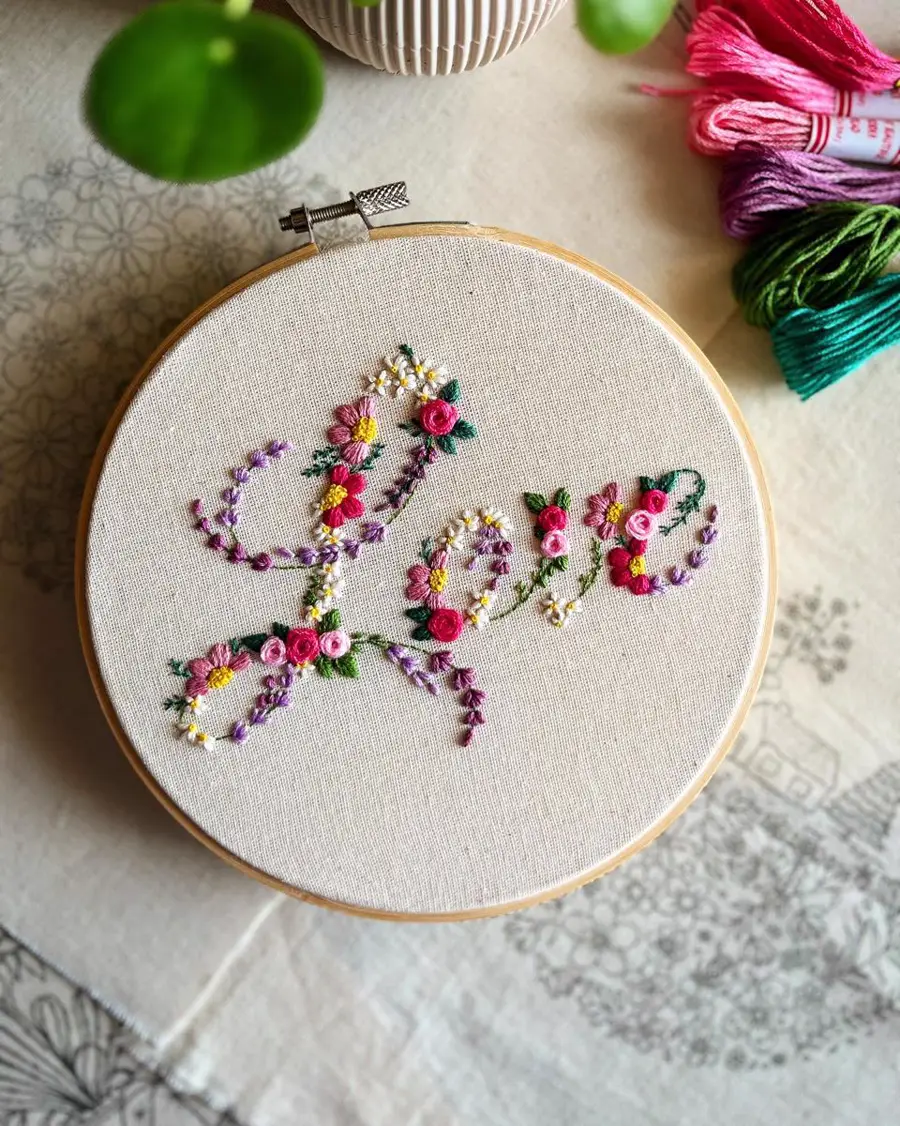
Store embroidery thread wound on bobbins in a closed box, away from sunlight and damp, and every type will last for years. Indian weather can be tough on supplies: monsoon humidity invites musty smells and mildew, and strong sunlight fades colours on a windowsill faster than you would expect.
- Wind skeins onto card or plastic bobbins and write the colour number on each one.
- Store bobbins in a closed box away from direct sunlight.
- Add a silica gel sachet to the box during the monsoon to absorb moisture.
- Keep threads away from damp walls and bathroom-adjacent cupboards.
- Group colours by family so it is easy to plan palettes; our post on choosing thread colours has more ideas.
Before stitching anything that will be washed, test dark or bright threads for colourfastness. Dampen a short length, press it between white tissue or cloth and see if any colour transfers. Reds and deep blues are the usual suspects.
How we use thread in our studio
We use stranded cotton for almost all our hoops and clothing because it gives us control. We can drop to a single strand for a character's tiny smile, then switch to two strands for smooth satin stitch across a coat, and build up long and short shading for skin tones and hair.
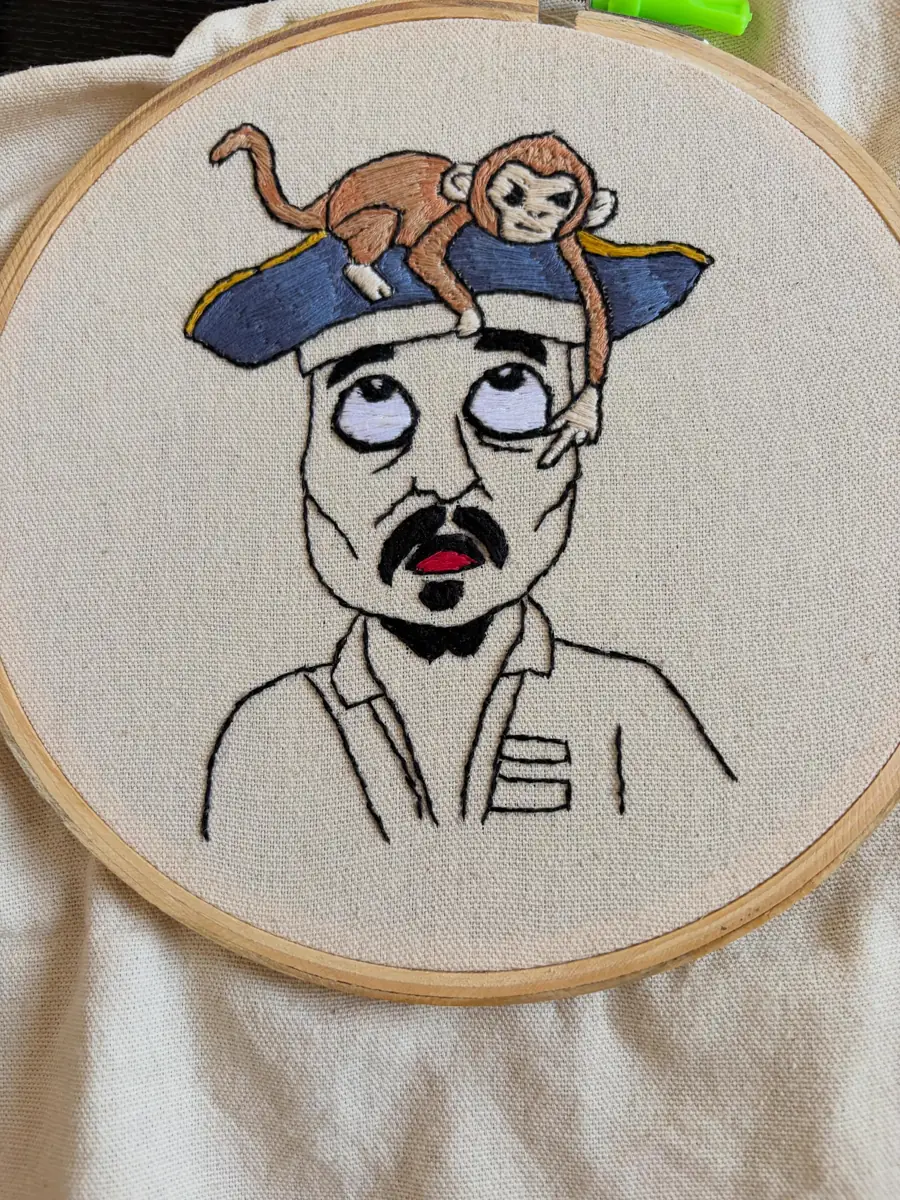
Every piece starts as a drawing on fabric, gets a backstitch outline, then colours are layered in stage by stage. You can see each step on our process page, from the first pencil lines to the finished hoop.
Frequently asked questions
What is the best type of embroidery thread for beginners?
Stranded cotton is the easiest place to start. It is affordable, comes in endless colours, and you can adjust thickness by changing how many strands you use. It also forgives beginner mistakes because you can unpick it without much damage.
What is the difference between stranded cotton and pearl cotton?
Stranded cotton is made of six loose strands you can separate, so you control the thickness. Pearl cotton is a single twisted thread that you use as it is, giving a raised, slightly beaded texture. Stranded cotton is more versatile, while pearl cotton is great for bold lines and decorative borders.
Can I use sewing thread for hand embroidery?
You can for very fine details, but regular sewing thread is thin and has little sheen, so it rarely gives the look people expect from embroidery. It is better to use a single strand of stranded cotton when you need something fine.
Why does my embroidery thread keep twisting and knotting?
Usually the length is too long, or the thread has twisted up as you stitch. Cut shorter pieces, separate and recombine strands before you start, and let your needle dangle every so often so the thread can untwist.
Which thread is best for embroidered clothes that will be washed?
Stranded cotton is a reliable choice for clothing because it handles gentle washing well. Test deep colours for colour bleeding first, and avoid large areas of metallic or rayon on garments you plan to wash often.
Choosing your thread, and your next piece
Once you understand the types of embroidery thread, you can plan each part of a design on purpose: fine strands for faces, fuller ones for fills, and a little shine where you want the eye to land. Start with stranded cotton, experiment with one new thread at a time, and keep notes on what you liked.
If you would rather have a finished piece than stitch one, browse our anime hoops in the shop or tell us your idea through the custom order form. We will draw a sketch and share the price and timeline with it before a single stitch goes in.
Topics: types of embroidery thread, embroidery thread types for beginners, stranded cotton vs pearl cotton, best thread for hand embroidery, how many strands of embroidery floss to use, silk vs cotton embroidery thread, metallic embroidery thread tips, embroidery thread storage in humid weather