Care guide
How to Wash Embroidered Clothes Without Ruining the Stitches
Hand-stitched tees and sweatshirts can last for years with the right care. Here is how to wash embroidered clothes, dry them, iron them and store them safely.
By Harshit Soni · Published · Updated
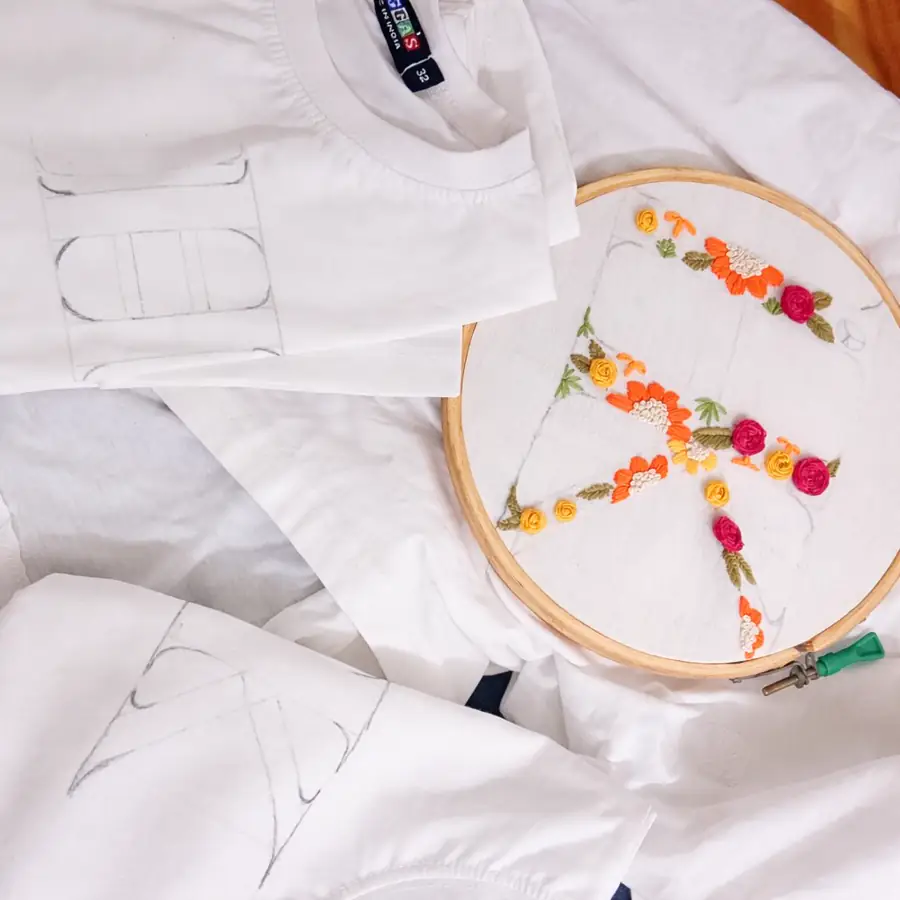
To wash embroidered clothes, turn them inside out and hand wash in cool water with a little mild liquid detergent, squeezing gently instead of scrubbing or wringing. Rinse until the water runs clear, roll in a towel, dry flat in shade, and iron from the back on a folded towel so the stitches stay raised.
A hand-embroidered tee or sweatshirt is not like the rest of your wardrobe. Every petal and letter is made of thread that sits on top of the fabric, so a careless wash can leave it puckered, faded or fuzzy. Knowing how to wash embroidered clothes properly keeps that stitching looking fresh wear after wear.
The good news is that it is not complicated. A few small changes to how you wash, dry and iron make a big difference. Most of it comes down to cool water, gentle handling and keeping heat away from the front of the stitches.
At Haré Creations we stitch names, initials and florals on clothing by hand with stranded cotton, so this is the routine we recommend to anyone wearing our pieces. It works just as well for embroidered kurtas, dupattas and anything else with hand stitching. For hoop art on your wall, see our separate embroidery care guide.
Key takeaways
- Test deep reds, blues and greens for colour bleeding before the first wash.
- Hand wash inside out in cool water; machine wash only on a gentle cold cycle in a mesh bag.
- Never wring, scrub or tumble dry embroidered clothes.
- Dry flat or over a rail in shade, and make sure pieces are fully dry before storing.
- Iron from the back, face down on a thick towel, never directly on the stitches.
Why do embroidered clothes need special care?
Embroidered clothes need special care because embroidery adds thread, tension and texture to a garment, and each reacts to washing in its own way. That is why a normal hot, fast wash is risky.
- Heat can shrink the base fabric slightly, while the stitches stay the same size, causing puckering around the design.
- Agitation and friction rough up the thread surface and make it look fuzzy.
- Strong detergents and bleach can fade or strip thread colours.
- Wringing twists the fabric and pulls stitches out of shape.
- Deep or bright threads may release a little dye in their first washes.
None of this means you must be afraid of washing. It just means the embroidered area deserves a softer touch than your gym clothes.
What should you check before the first wash?
Before the first wash, check the garment's care label and test the thread colours. The label tells you what the base fabric can handle, and you should always stay within it. If the label says cold wash only, the embroidery does not change that.
Next, do a quick colourfastness test, especially on new pieces with reds, deep blues or dark greens. Dampen a small area of stitching with cold water, press a white cloth or tissue on it firmly, and check for colour transfer. If you see colour, wash that piece separately in cold water for the first few washes.
How to wash embroidered clothes by hand
Hand washing is the gentlest option and the one we recommend for hand-embroidered pieces. It takes only a few minutes and gives you full control.
- Turn the garment inside out so the embroidery is protected from direct rubbing.
- Fill a bucket or basin with cool or lukewarm water; avoid hot water.
- Add a small amount of mild liquid detergent and swirl it in until dissolved, so no undissolved powder sits on the threads.
- Submerge the garment and gently squeeze the suds through the fabric. Do not scrub the embroidered area.
- Let it sit briefly, but avoid long soaks, which can encourage colour bleeding.
- Drain and rinse in fresh cool water until the water runs clear.
- Press the water out gently with your palms. Never wring or twist.
Spot cleaning small stains
For a small mark near the embroidery, you may not need a full wash. Blot, do not rub, with a clean cloth dampened in cool water and a drop of mild soap. Work from the back of the fabric where possible, then rinse the spot with plain water and let it dry flat.
After festive meals or Holi, act quickly. Rinse the stained area from the reverse under cool running water before the stain sets, and avoid harsh stain removers or bleach anywhere near the stitching.
Can you machine wash embroidered clothes?
Yes, you can machine wash embroidered clothes if the garment's label allows it, using a gentle cycle, cold water and a mesh bag. A careful machine wash is usually fine for sturdy cotton tees and sweatshirts. Follow these rules to reduce wear:
- Turn the garment inside out.
- Place it in a mesh laundry bag to reduce friction.
- Choose the gentle, delicate or hand-wash cycle.
- Use cold water and a mild liquid detergent.
- Pick a low spin speed.
- Wash with similar colours and soft fabrics, not jeans or anything with zips and hooks that can snag threads.
- Remove it as soon as the cycle ends so it does not sit crumpled and damp.
Skip the tumble dryer. The heat and tumbling are much harder on embroidery than the wash itself.
How do you dry embroidered clothes in the monsoon?
Dry embroidered clothes flat or over a rail, inside out and in shade, because drying is where many pieces lose their shape. A heavy wet sweatshirt hung from its shoulders stretches, and harsh afternoon sun can fade threads over time.
- Lay a dry towel flat, place the garment on it and roll them up together to absorb extra water.
- Unroll and reshape the garment, smoothing the embroidered area flat with your hands.
- Dry flat or over a drying rail, inside out, in shade or indirect light.
- Heavier sweatshirts are best dried flat to avoid stretching.
- Make sure the garment is completely dry before folding it away.
Drying tips for humid weather
During the monsoon, clothes can stay damp for a long time and pick up a musty smell. Dry indoors in a well-ventilated room with a fan running, space items apart on the rack, and turn the garment over once so both sides get air. Avoid putting a slightly damp embroidered piece into a cupboard, as trapped moisture encourages mildew.
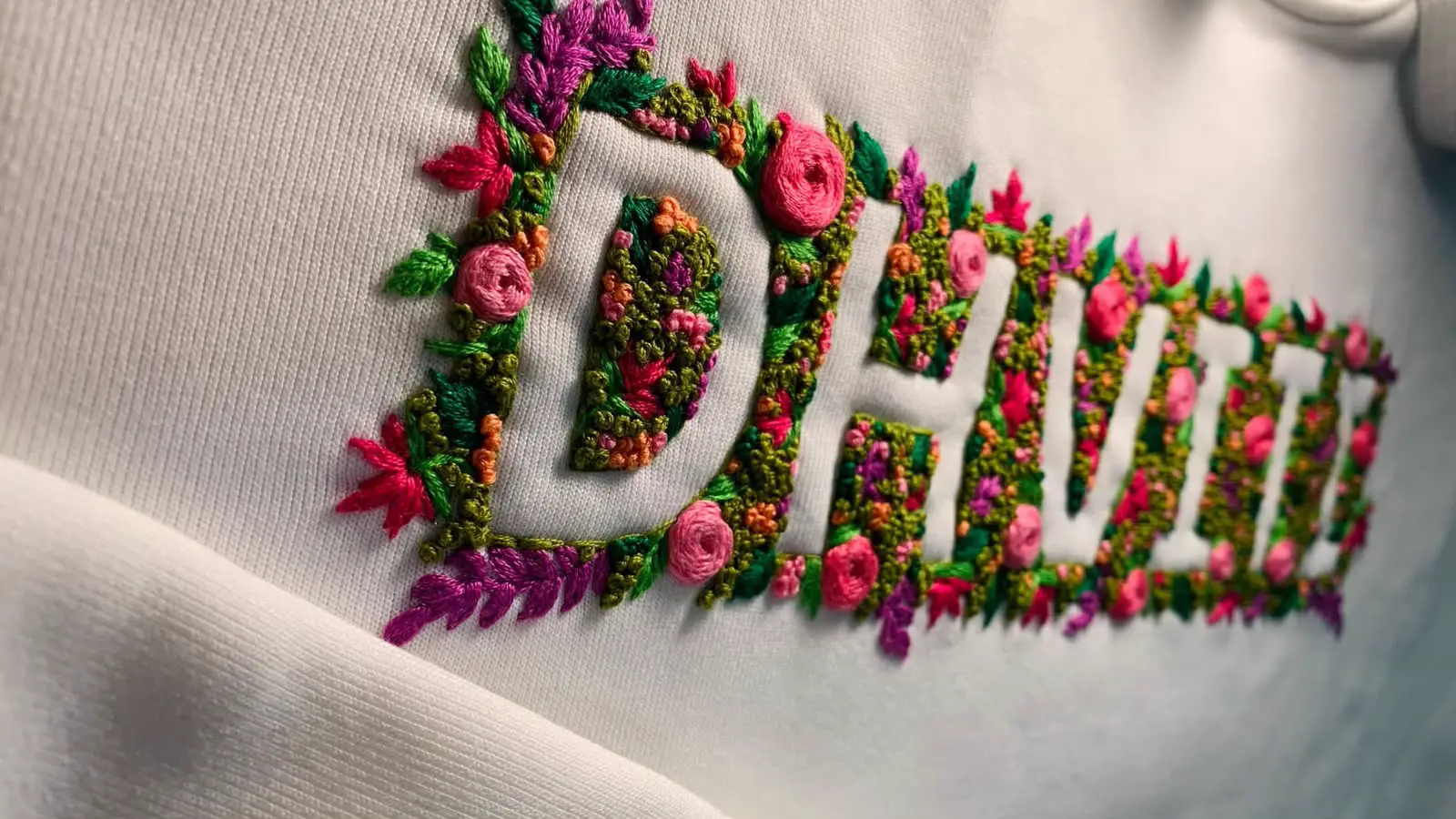
How do you iron embroidery without flattening it?
Iron embroidery from the back, face down on a thick towel, so the stitches stay raised. Ironing directly on the front squashes the stitches and can make the thread shiny.
- Lay a thick, folded towel on the ironing board.
- Place the garment embroidery face down on the towel.
- Use a heat setting suited to the base fabric, not the highest setting.
- Press, lifting and lowering the iron rather than sliding it back and forth across the stitches.
- Use a thin pressing cloth between the iron and the fabric if you want extra protection.
If you send clothes to a local ironing service, it helps to mention that the piece is hand embroidered and ask them to press it from the reverse on a soft surface.
How to store embroidered clothes
Store embroidered clothes folded and completely dry in a clean cupboard away from direct sunlight. Fold garments so the crease does not run through the middle of the design.
- Fold heavier sweatshirts rather than hanging them on thin hangers, which can stretch the shoulders.
- Place a sheet of plain tissue or a soft cotton cloth over the embroidery if you stack clothes.
- Keep a few silica gel sachets or a breathable cotton bag in the cupboard during the monsoon.
- Avoid sealing slightly damp clothes in plastic bags.
- Air out festive pieces now and then if they are stored for long periods between Diwali or wedding seasons.
How to wash embroidered clothes by garment type
The basic routine stays the same, but different pieces have their own quirks. Here is how we would approach the embroidered clothes people wear most often.
Embroidered t-shirts
Cotton tees are the easiest to care for. Hand wash or use a gentle machine cycle inside out in a mesh bag, then dry flat or over a rail in shade. Lighter tees show dye transfer more easily, so be extra careful with colourful florals on white fabric for the first few washes.
Embroidered sweatshirts and hoodies
Sweatshirts hold a lot of water and become heavy when wet, which is why they stretch if you hang them. Press out water gently, roll them in a towel and dry them flat. The fleece inside can shed a little lint, so wash them with similar fabrics rather than with dark trousers.
Kurtas, dupattas and festive wear
Traditional pieces often combine embroidery with delicate base fabrics, sequins, mirrors or metallic zari. Always follow the care label here. Many garments with metallic or heavily embellished work are labelled dry clean only, and it is worth respecting that instead of experimenting at home.
Kids clothes and keepsakes
Children's clothes get washed often, so choose the gentlest method you can manage and check the stitching every so often for loose threads. If you spot a loose end, do not pull it; trim it carefully or ask the maker to secure it.
Whatever the garment, the first few washes tell you the most. Watch how the fabric and thread behave, note whether any colour runs, and adjust your routine from there. A piece that washes cleanly and keeps its shape the first few times will usually stay that way with the same gentle care.
What should you avoid when washing embroidery?
When washing embroidery, avoid bleach, heat, scrubbing, wringing, long soaks and ironing on the front. If you remember nothing else about how to wash embroidered clothes, remember this list:
- Bleach and strong whitening products.
- Hot water and hot dryer cycles.
- Scrubbing brushes or rubbing the stitches against each other.
- Wringing or twisting the garment to remove water.
- Long soaks, especially with bright or dark threads.
- Ironing directly on the front of the embroidery.
| Do | Don't | Why |
|---|---|---|
| Wash in cool water | Use hot water | Heat can shrink fabric and pucker the design |
| Press water out with your palms | Wring or twist | Twisting pulls stitches out of shape |
| Use a mild liquid detergent | Use bleach | Bleach can fade or strip thread colours |
| Dry flat in shade | Tumble dry or dry in harsh sun | Heat and sun wear and fade threads |
| Iron from the back on a towel | Iron the front of the stitches | Direct heat flattens and shines the thread |
| Store fully dry with silica gel | Seal damp clothes in plastic | Trapped moisture encourages mildew |
Thread type matters too. Stranded cotton, which we use, handles gentle washing well, while metallic and rayon threads are more delicate. Our guide to types of embroidery thread explains the differences.
Caring for embroidered gifts and keepsakes
Embroidered gifts and keepsakes that are rarely worn need washing only when necessary, by hand, with flat drying and soft storage. A keepsake cloth made for a new baby, for example, is often displayed or kept folded rather than worn. If it needs cleaning, hand wash it using the steps above, dry it flat in shade and store it wrapped in soft cotton.
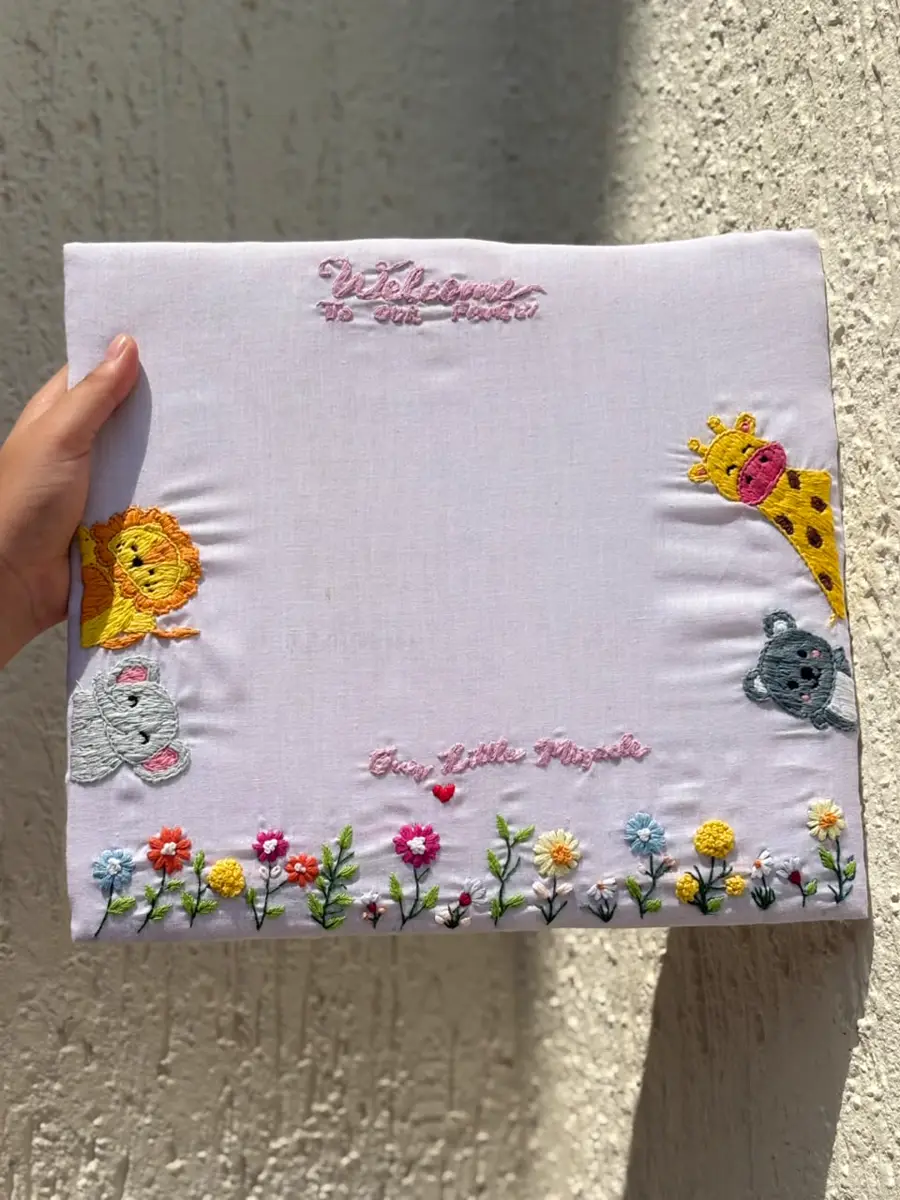
When you gift embroidered clothing for a birthday, Raksha Bandhan or a festival, it is thoughtful to pass on a few care tips so the person can enjoy it for longer.
Frequently asked questions
Can I wash embroidered clothes in hot water?
It is best not to. Hot water can shrink the base fabric slightly and cause puckering around the stitches, and it increases the chance of colours bleeding. Cool or lukewarm water is safer for embroidery.
What should I do if the embroidery colour bleeds?
Rinse the garment right away in plenty of cold water and keep rinsing until the water runs clear. Do not leave it bunched up while wet, as that can let dye settle into the fabric. Dry it flat in shade and wash it separately for the next few washes.
Is it safe to use fabric softener on embroidered clothes?
A small amount of mild fabric conditioner is generally fine for cotton garments, but it is not necessary. If you use it, keep it light and rinse well so it does not leave residue on the threads.
How often should I wash a hand-embroidered sweatshirt?
Wash it when it actually needs it rather than after every wear. Airing it out between wears and spot cleaning small marks reduces the number of full washes, which keeps the stitching looking newer for longer.
Why has my embroidery puckered after washing?
Puckering usually comes from heat or rough handling shrinking or distorting the fabric around the stitches. Try dampening the area, gently smoothing it flat by hand and pressing it face down on a towel. Washing cool and drying flat helps prevent it next time.
Wear it, wash it, love it for years
Now you know how to wash embroidered clothes the gentle way: test colours, wash cool and inside out, never wring, dry flat in shade, iron from the back and store dry. These habits take a few extra minutes and protect hours of hand stitching.
Looking for something new to wear? See our floral name sweatshirt, browse more names and florals, or read about name embroidery on t-shirts. For something fully personal, share your idea through the custom order form.
Topics: how to wash embroidered clothes, how to wash hand embroidered t-shirt, can you machine wash embroidered clothes, how to iron embroidery without damaging it, embroidery thread colour bleeding fix, how to dry embroidered clothes in monsoon, embroidered sweatshirt care, how to store embroidered clothes